"If my extension is denied, do I have to leave immediately?" A denial does not itself mean departure. Your stay remains lawful until the departure deadline stated in the notice or the end of your remaining period of stay, and within that time you determine whether the matter can be resolved by reapplying with supplements or must be contested as a disposition. A denial issued within Korea can be challenged by administrative appeal or revocation suit.
The options and deadlines after a denial
On receiving a denial, the first thing to confirm is the departure deadline stated in the notice or the remaining period of stay. That date is the limit within which reapplication, appeal or departure can be chosen.
Missing the deadline turns the matter into unlawful stay, changing its character from an extension issue to a removal issue, and the record of overstaying weighs against later applications. Fixing the time available comes before deciding the content of the response.
Confirming the reason for denial
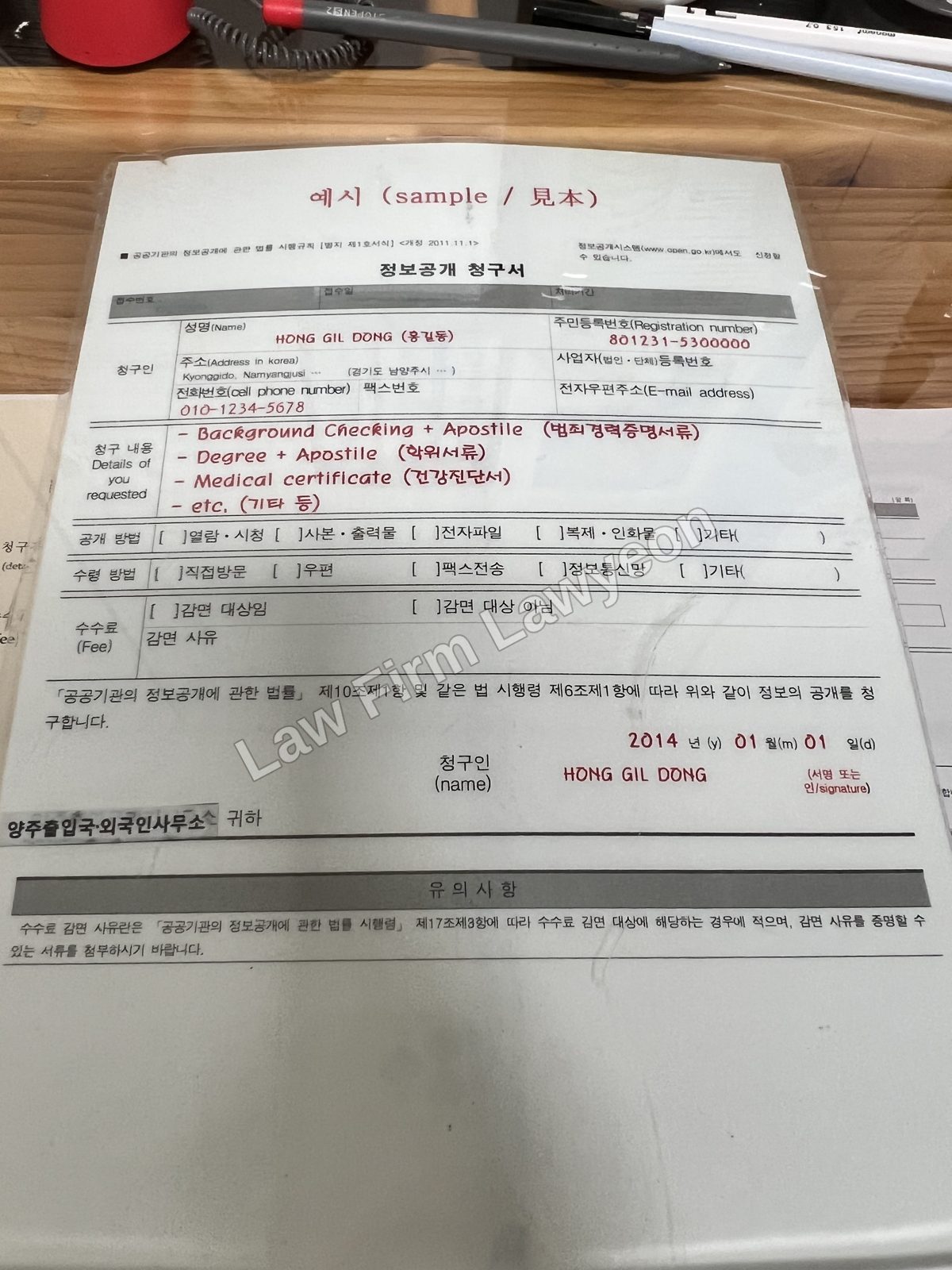
The reason stated in a denial notice is often brief. Reapplying with the same documents without confirming the reason produces the same result and adds a record of repeated applications on identical grounds. The specific reason can be confirmed with the disposing authority or obtained through an information disclosure request.
Reasons divide broadly into two: 1) a requirements problem — income, employment or documentation fell short of the standard; and 2) a record problem — fines, penalty notices or other violations were reflected in the review. Which of the two it is determines the path that follows.
Reapplication versus appeal
Where the reason is unmet requirements, the usual course is to supplement what was lacking and reapply. It should be noted, however, that the review considers the record of the earlier application, so statements inconsistent with that record, or resubmission of identical documents, can weigh against you.
Where the reason is your record, or where the application was denied despite meeting the requirements, reapplication alone does not resolve the matter; the disposition itself is contested by administrative appeal or revocation suit. A revocation suit must be filed within 90 days of learning of the disposition, and where the departure deadline arrives during the proceedings, protective measures such as a stay of execution are considered together.
Meanwhile, a distinction should be drawn: under Supreme Court precedent, a visa refusal by an overseas mission is difficult for a foreign national to litigate, whereas denials issued within Korea — extension and change denials, departure orders, deportation — are subject to administrative appeal and revocation suit. The general statement that visa matters cannot be litigated concerns overseas refusals; for domestic dispositions the appeal path is open.
When requirements were met but the application was denied
Suppose, for example, an application that met the income and employment requirements but was denied because of past penalty notices. Which path is appropriate cannot be judged on general criteria alone: with no documents to supplement, reapplication has little to offer, while in an appeal the issue becomes whether the denial is excessive in light of the person's circumstances.
Appeal proceedings weigh 1) the length and depth of settlement, 2) family relationships in Korea, 3) the circumstances and repetition of the violations, and 4) the consistency of statements and the record of procedural compliance. The conclusion can differ with the combination and substantiation of these factors, so case-by-case review is required.
The order of response
Taking the above together, on receiving a notice it is advisable first to confirm the departure deadline and remaining period of stay; then to fix the reason for denial through the authority or an information disclosure request; and then, if it is a requirements problem, to supplement and reapply, or if it is a record problem, to begin the appeal within the period.
Frequently asked questions
The Visa & Immigration Center of Law Firm Lawyeon provides legal services specialized in the integrated handling of Korean immigration and visa matters together with criminal cases and immigration-violation reviews, built on extensive case experience, professional networks, and practical knowledge.
The Center was founded through the organic collaboration of attorneys Junwoo Min, Dohyun Nam, and Seungchul Kim — criminal-law specialists who have advised across a wide range of immigration matters — with Senior Advisor Taemin Ahn, who has served at the Seoul Global Center, as a center head at the Ministry of Justice's Global Start-up Immigration Center, and as a member of the Foreign Workers' Rights Protection Council of the Seoul Regional Employment and Labor Administration. It is Law Firm Lawyeon's dedicated center for immigration practice.
In particular, for departure orders and entry-ban dispositions that follow a final criminal conviction, the Center presents effective solutions through an integrated strategy spanning criminal defense, objections to the disposition, and applications to lift the entry ban, and it supports stable business activity in Korea by managing many clients' immigration risk.
This article is intended as general information about the relevant legal framework and is not legal advice on any individual matter. Determinations concerning immigration status may differ depending on specific facts such as residence history, income and contractual relationships. If your situation requires individual review, you may request a consultation with the Immigration Support Center of Law Firm Lawyeon (lawyeonvisa.app).